What Does a Digital Marketing Agency Actually Do?
From websites and SEO to social media, content, branding and paid advertising, discover what a digital marketing agency actually does and how these services work together to build a stronger online presence.
What Does a Digital Marketing Agency Actually Do?
A digital marketing agency helps businesses build, manage and improve their presence across the online channels where customers discover, research and interact with brands.
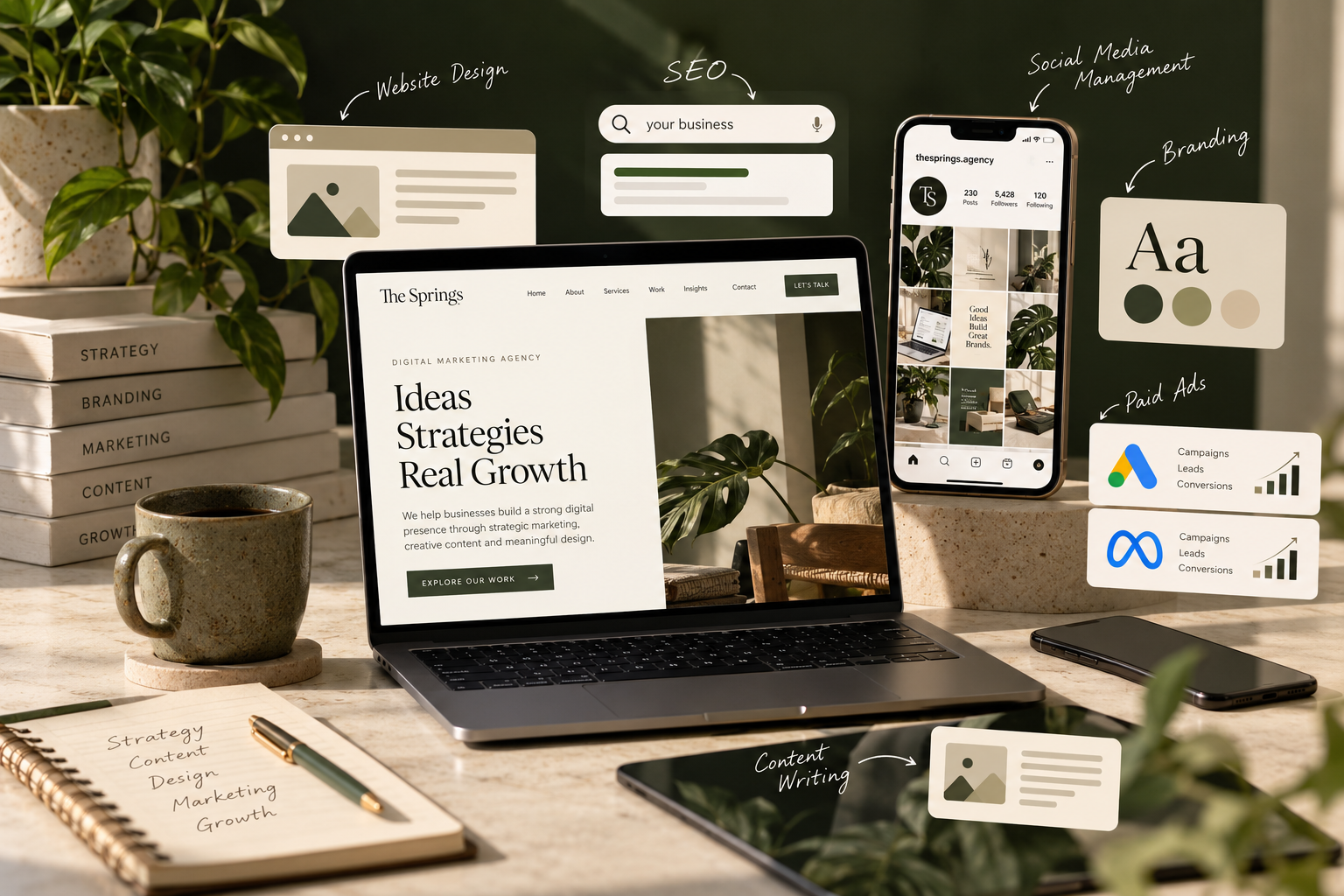
That can include much more than posting on social media or running advertisements. Depending on the business and its goals, a digital marketing agency may work across website design, search engine optimization, content, social media, branding and digital advertising.
The real value comes from bringing these activities together rather than treating them as completely separate tasks. A well-structured website can support SEO, useful content can strengthen search visibility, social media can help people discover the brand, and advertising can create additional opportunities to reach the right audience.
In this guide, we will look at what a digital marketing agency actually does, the main services involved and how these different pieces can work together to create a stronger and more consistent online presence.
What Is a Digital Marketing Agency?
A digital marketing agency is a team that helps businesses use digital channels strategically to reach their audience, communicate their value and support business growth.
Instead of relying on a single online channel, an agency can help a business build a connected digital presence. This may involve creating or improving a website, increasing visibility in search engines, managing social media, developing useful content, strengthening the brand and running paid advertising campaigns.
The exact mix of services depends on the business. A local service provider may need a strong website, local SEO and a well-managed Google Business Profile, while an established brand may focus more heavily on content, social media, search visibility and paid campaigns.
The goal is not simply to be present everywhere. The goal is to make the right digital channels work together around clear business objectives.
Think of digital marketing as a connected system. Your website, search visibility, content, social media, branding and advertising can each play a different role while working toward the same larger goal: helping the right people discover, understand and choose your business.
A Strong Website Is the Foundation of Your Digital Presence
Your website is often the place where potential customers decide whether to learn more about your business, contact you or move on.
A digital marketing strategy becomes much more effective when it is supported by a website that clearly communicates what a business offers. Good website design is not only about making a page look attractive. It is about creating a clear experience that helps visitors find information, understand the business and take the next step.
A professional business website should also work well across different screen sizes, load efficiently and make important information easy to find. Clear navigation, useful content, strong calls to action and a consistent visual identity all contribute to a better experience.
Clear Structure
Visitors should be able to understand what your business offers and where to find the information they need.
Mobile Experience
A website should remain easy to navigate and read on phones and tablets, not just desktop screens.
Useful Content
The website should answer important customer questions and communicate the value of your products or services.
Clear Next Steps
Contact forms, enquiry buttons and other calls to action should make it simple for interested visitors to continue.
When your website provides a solid foundation, other digital marketing activities can direct people toward a destination that is ready to inform, engage and convert them.
Explore Website Design →SEO Helps the Right People Find Your Business
Search engine optimization helps a business become more discoverable when potential customers search for products, services or information related to what it offers.
A website can be professionally designed and still receive little organic traffic if search engines and users cannot clearly understand what its pages are about. SEO helps address this by improving the structure, content and technical foundations of a website.
Effective SEO is not simply about adding keywords to a page. It involves understanding what people are searching for, creating useful content, organizing information clearly and making sure the website provides a good experience.
Keyword Strategy
Understanding the words and phrases your potential customers actually use when searching helps shape useful website content.
Quality Content
Helpful, relevant content can answer customer questions and give search engines a clearer understanding of your expertise.
Technical Foundations
Page speed, mobile usability, site structure, indexing and other technical factors can influence how effectively a website performs in search.
Ongoing Improvement
SEO is an ongoing process. Search behaviour, competitors and search engine results change, so websites benefit from regular review and improvement.
For businesses that want sustainable visibility, SEO can become an important part of a broader digital marketing strategy rather than a one-time task.
Explore SEO Services →Social Media Helps Your Brand Stay Connected
Social media gives businesses a direct way to communicate with their audience, showcase what they offer and remain part of the conversations happening around their brand.
For many businesses, social media is one of the most visible parts of their digital presence. But effective social media marketing is about more than simply publishing posts whenever there is something to share.
A consistent strategy considers the audience, content themes, visual identity, publishing frequency and business goals. The objective is to create content that is useful, relevant and recognizable while giving people a reason to engage with the brand.
Brand Awareness
Consistent social content can help more people become familiar with your business, its personality and what it offers.
Audience Connection
Social platforms provide opportunities to communicate directly with customers and understand what interests them.
Content Distribution
Social media can help distribute useful content from your website and give people another way to discover your brand.
Community Building
Regular, authentic communication can help turn one-time visitors into an audience that recognizes and remembers your business.
The strongest social media strategies also connect back to the wider digital presence. A social post may introduce someone to a brand, while the website provides the deeper information they need before making an enquiry or purchase.
Explore Social Media Services →Content Gives Your Digital Presence Something Valuable to Say
Content marketing helps businesses communicate their knowledge, answer customer questions and give people useful reasons to engage with the brand.
Content can take many forms. A business might publish educational blog articles, service guides, social media posts, videos, case studies, email content or resources designed to answer common customer questions.
The most effective content starts with the audience rather than the platform. Instead of creating content simply because a business has not posted recently, the focus should be on what customers need to know, what problems they are trying to solve and what information can help them make a better decision.
In-depth articles can answer search queries, demonstrate expertise and provide useful information for people researching a product or service.
Short-form posts, carousels, videos and stories can communicate ideas quickly and keep the brand visible between website visits.
Real project examples can show how a business approaches problems and the type of work customers can expect.
Helpful resources can simplify complex topics and give potential customers practical information before they make a decision.
Good content should not exist in isolation. A useful article can support SEO, become social media content, strengthen brand authority and guide interested visitors toward a relevant service or enquiry.
Branding Makes Your Business Recognizable
A strong digital presence needs more than useful information. It also needs a clear and recognizable identity that people can remember across different platforms.
Branding brings together the visual and verbal elements that shape how a business presents itself. This can include the logo, colours, typography, imagery, messaging and overall creative direction.
Consistency matters because customers may encounter a business in several different places before they ever make contact. They might see an Instagram post, visit the website, find a Google listing or come across an advertisement. A consistent brand helps these different experiences feel connected.
Visual Identity
Colours, typography, imagery and design choices create a recognizable visual language for the business.
Brand Voice
Clear and consistent language helps a business communicate its personality and values more effectively.
Consistency
Maintaining a recognizable identity across digital touchpoints can make the overall customer experience feel more trustworthy.
Branding therefore works alongside website design, social media and content rather than sitting separately from them. When the same identity carries across each channel, the digital presence becomes easier to recognize and remember.
Explore Branding & Creative →Paid Advertising Can Put Your Business in Front of the Right Audience
Paid advertising allows businesses to reach specific audiences and create opportunities for visibility without waiting entirely for organic traffic to build.
Search and social advertising work differently from organic marketing. Instead of relying on someone to discover a website naturally, businesses can use paid campaigns to reach people based on factors such as search intent, interests, location or other audience signals.
Reach People With Search Intent
Google Ads can help businesses appear when people are actively searching for relevant products or services. This can be particularly useful when there is clear demand for what the business offers.
Build Awareness and Demand
Meta advertising can help businesses introduce products, services or offers to targeted audiences across platforms such as Facebook and Instagram.
Paid advertising works best when campaigns have a clear objective, relevant messaging, appropriate targeting and a destination that makes it easy for people to take the next step.
Paid advertising should not automatically replace organic marketing. In many cases, paid campaigns and long-term activities such as SEO, content and social media can complement each other as part of a broader digital strategy.
The Real Value Comes From Making Everything Work Together
Digital marketing services are most effective when they support one another instead of operating as disconnected activities.
Think about a potential customer discovering a business for the first time. They might find the business through a Google search, see a social media post, visit the website, read an article and eventually make an enquiry. Each interaction contributes to their overall impression of the brand.
This is why a digital marketing agency needs to look beyond individual tasks. The website should support the brand. Content should support SEO. Social media should help distribute content and build awareness. Advertising should lead people toward useful, relevant destinations.
Discover
SEO, social media and advertising can help potential customers discover the business through different online channels.
Explore
The website and useful content give visitors the information they need to understand the business and its offering.
Recognize
Consistent branding across the website, social channels and advertising helps create a more recognizable experience.
Take Action
Clear calls to action make it easier for interested visitors to enquire, book, purchase or contact the business.
A connected strategy creates a more coherent customer journey. Instead of asking which single marketing channel is best, businesses can focus on how different channels can work together around their specific goals.
Not Every Business Needs Every Digital Marketing Service
There is no universal digital marketing package that works equally well for every business.
A local business, a new startup, an established service company and an e-commerce brand can have very different audiences, challenges and goals. Their digital marketing priorities should reflect those differences.
For example, a local business may benefit from focusing first on its website, local search visibility, social media and Google Business Profile. A new business may need to establish its brand and core digital presence before investing heavily in advertising. Another business may already have strong organic visibility and need paid campaigns to reach a specific audience or promote a particular offer.
Business Goals
Marketing activities should support a clear objective, such as increasing enquiries, improving visibility, generating leads or building awareness.
Target Audience
The channels that matter most depend on where your potential customers search, spend time and make decisions.
Current Digital Presence
A business with an outdated website may need to strengthen its foundation before putting significant resources into driving more traffic.
Available Resources
A practical strategy should consider the time, budget and internal resources available to maintain marketing activities consistently.
The right strategy is not about doing everything. It is about identifying the activities most likely to help your business reach the right people and then improving those activities consistently over time.
When Should You Hire a Digital Marketing Agency?
Hiring an agency can make sense when your business needs a stronger digital presence but does not have the time, expertise or resources to manage everything consistently in-house.
You do not necessarily need an agency simply because you are starting a business. Some businesses can manage parts of their digital marketing internally, especially when their needs are straightforward and they have the right skills available.
However, as a business grows, digital marketing can become increasingly difficult to manage alongside everyday operations. Strategy, content, website updates, SEO, social media, advertising and performance tracking can quickly become a significant workload.
Your Online Presence Feels Outdated
An old website, inconsistent branding or inactive social profiles may make it harder for potential customers to understand and trust your business.
You Are Struggling to Get Found Online
If potential customers are searching for your services but your business is difficult to discover, a focused SEO and digital strategy may help.
Marketing Has Become Too Time-Consuming
When creating content, managing campaigns and maintaining digital channels starts taking time away from running the business, outside support can become valuable.
You Want a More Structured Strategy
An agency can help bring different digital activities together around specific goals instead of managing each platform as a separate task.
The right time to work with an agency is ultimately about the needs of the business. The goal should be to gain useful expertise and a clear strategy — not simply to outsource tasks without understanding why they are being done.
How to Choose the Right Digital Marketing Agency
The right digital marketing agency should understand your business, communicate clearly and build a strategy around your actual goals rather than simply selling a list of services.
Before choosing an agency, look beyond how impressive its website or social media profile appears. Ask how the agency approaches strategy, how it measures progress and whether it can explain its recommendations in a way that makes sense for your business.
Understand Their Approach
A good agency should be able to explain what it plans to do, why those activities matter and how they connect to your business objectives.
Look at Relevant Work
Review examples of previous work and consider whether the agency has experience with businesses or challenges similar to yours.
Ask About Communication
Clear communication matters. You should know who you are working with, how updates are handled and how often progress is reviewed.
Understand What Is Included
Make sure you understand which services, deliverables, revisions, reporting and ongoing support are included before starting a project.
Look Beyond Vanity Metrics
Followers and impressions can be useful indicators, but they should not be the only measures of success. Focus on metrics connected to your actual goals.
Choose a Long-Term Fit
Digital marketing is an ongoing process, so choose a partner you can communicate with comfortably and work with consistently.
- What would you recommend for my business and why?
- Which channels should we focus on first?
- How will you measure progress?
- What will the first few months of work look like?
- Who will be responsible for communication and strategy?
Digital Marketing Works Best When It Has a Clear Purpose
A digital marketing agency is not simply a team that manages websites, social media or advertising campaigns. Its role is to help businesses make better use of digital channels to reach the people who matter to them.
The right approach will look different for every business. Some may need to strengthen their website and SEO foundations first. Others may be ready to invest in social media, content, branding or paid advertising.
What matters most is having a clear understanding of what the business wants to achieve, who it wants to reach and which digital activities are most likely to support those goals.
When the different pieces of a digital presence are planned together, they can create a more consistent experience for customers — from the moment they discover a business to the moment they decide to get in touch.
You do not need to do everything at once. Start with the digital foundations your business needs most, build them well, measure what matters and expand your strategy as your business grows.
Ready to build a stronger digital presence?
Whether you need a better website, stronger visibility, consistent social media or a more focused digital strategy, let's build something that works for your business.
Start a Conversation →