
Make a Clear First Impression
A consistent visual identity, readable content and organised layout help visitors understand your business without having to search through confusing pages.
Your website is often one of the first places potential customers go to understand your business. A thoughtfully built website can establish credibility, communicate what you offer and make it easier for people to take the next step. In 2026, it remains an important foundation for a business's digital presence.
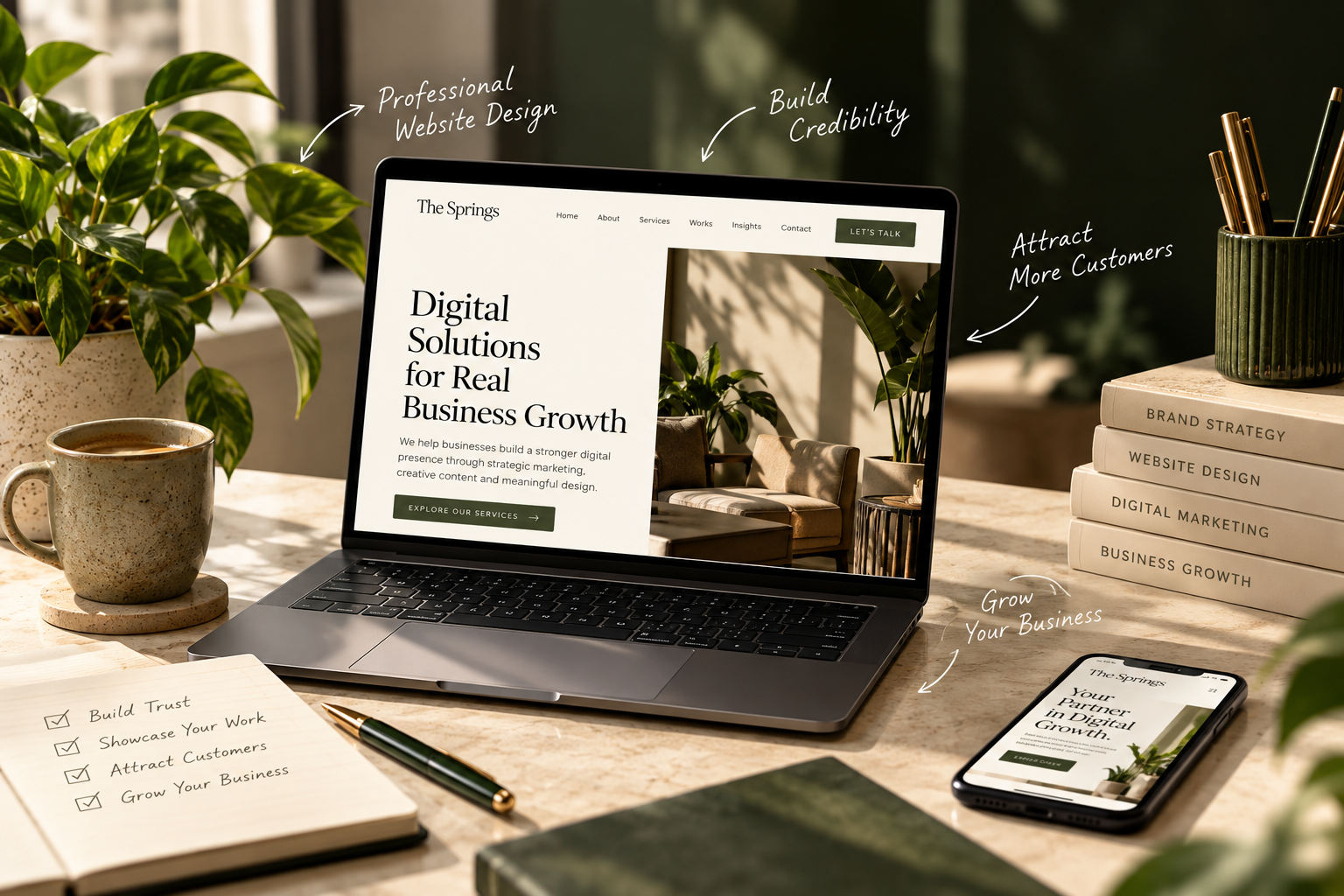
When people discover a business, they often look online before deciding whether to make an enquiry, visit a location or purchase a product. What they find can influence how they perceive the business and whether they feel confident taking the next step.
Social media profiles and business listings are useful ways to connect with potential customers. However, a professional website gives your business its own dedicated space to explain its services, showcase its work, answer important questions and communicate what makes it different.
A website alone cannot guarantee sales or a top position on Google. Its real value comes from how well it serves your audience: providing useful information, working smoothly across devices and making the next step clear. When supported by relevant content and consistent marketing, it can become an important part of your wider digital strategy.
Before contacting a business, potential customers often want to know who it serves, what it offers and whether it understands their needs. A well-structured website helps answer those questions clearly and professionally.
A consistent visual identity, readable content and organised layout help visitors understand your business without having to search through confusing pages.
Use your website to explain your services, highlight your approach and share relevant examples of your work. Give visitors useful reasons to consider your business.
Clear service descriptions, pricing information where appropriate, FAQs and contact details help people understand what to expect before they get in touch.
Ensure your business name, services, contact details and messaging are accurate and aligned with the information customers see across your other online channels.
Customers don't always search for services during working hours. A website gives them a convenient place to learn about your business whenever they are ready to explore their options.
Visitors can explore what you offer, who your services are designed for and how your business may meet their needs without waiting for a response.
Service details, location, opening hours, frequently asked questions and contact information can all be organised in one accessible place.
Well-placed contact forms, enquiry buttons, phone links or WhatsApp links can help interested visitors take the next step when it suits them.
A mobile-friendly website lets people browse your business on their phones, tablets or computers, with content and navigation that adapt to their screen.
A website gives search engines a place to understand your business and its content. With useful information, a logical structure and sound technical foundations, it can support your search visibility and help relevant visitors find your services.
Create pages that answer real customer questions and explain your services using natural, relevant language. Keyword research can help identify the topics your audience is looking for.
Descriptive headings, meaningful page titles and a logical navigation structure help visitors understand your content and help search engines interpret each page.
Pages should be readable, navigation should be easy to use, and important actions should work on smaller screens. A frustrating mobile experience can make visitors leave.
Page speed, crawlability, indexing, secure connections and working links all contribute to a website that search engines can access and visitors can use effectively.
Many people browse businesses on their phones, often while comparing options or looking for a quick answer. A mobile-friendly website makes it easier to read information, navigate pages and contact your business without unnecessary effort.
Use comfortable font sizes, appropriate line spacing and short paragraphs so visitors can understand your message without constantly zooming in.
Keep menus organised and make important pages easy to reach. Visitors should be able to find services and contact details without getting lost.
Optimised images, efficient code and reliable hosting can help pages load smoothly and reduce frustrating delays.
Make enquiry buttons, forms, phone numbers and relevant messaging links easy to tap, with enough spacing to avoid accidental clicks.
Attracting visitors is only one part of building an effective online presence. Your website should also help people understand your offer, find the information they need and decide what to do next.
Dedicated service pages help visitors understand what you provide, who it is for and how it may address their needs. Clear information reduces uncertainty before an enquiry.
Buttons such as "Request a Quote", "Book a Consultation" or "Contact Us" guide visitors towards a relevant next step. Choose wording that matches the action you actually offer.
Simple forms, working contact links and clear contact details make it easier for interested people to reach your business. Ask only for information you genuinely need.
An effective website connects useful information with clear actions. The aim is not to pressure every visitor into buying, but to help the right people move forward with confidence.
Every business website has a different purpose, but certain foundations help visitors navigate information, understand your offering and contact you without unnecessary friction.
Explain what your business does, who you help and what makes your offering relevant. Give visitors a clear starting point instead of leaving them to guess.
Describe your services or products in sufficient detail. Organised pages help potential customers find relevant information and support a clearer site structure.
Introduce your business, explain your approach and make contact details easy to find. Add accurate location and opening-hour information when relevant.
Where available, genuine customer reviews, case studies, project examples and portfolio images can help visitors understand your experience and the quality of your work.
Give visitors useful next steps, such as requesting a quote, booking a consultation, making an enquiry or contacting your team through an appropriate channel.
Prioritise reasonable loading times, readable text, keyboard- accessible navigation, a secure HTTPS connection and forms that work reliably across devices.
Remember: your website does not need every possible feature from day one. Start with the pages and functions that support your business goals, then improve the experience as your needs grow.
Even a visually attractive website can lose its effectiveness when visitors struggle to use it or cannot find the information they need. Avoiding a few common mistakes can improve the overall experience.
Large unoptimised images, unnecessary scripts and inefficient code can make pages slow. Compress images, review plugins and test performance on real devices.
Too many menu items, unclear page names or broken links make information difficult to find. Keep the structure logical and the important pages easy to access.
Text that is too small, overlapping sections and awkward horizontal scrolling create friction. Check every important page on mobile, not just on a desktop screen.
Old contact details, expired offers and vague service descriptions can undermine confidence. Review your content regularly and keep business information accurate.
Visitors may leave if they cannot work out how to enquire, book or purchase. Use relevant calls to action and ensure forms and contact links function properly.
Missing page titles, thin content and poor internal linking can limit search visibility. Plan your page structure and content around the needs of your audience from the beginning.
Your website should look professional, work reliably and make it easy for the right people to understand your business.
For a small business, every expense needs a purpose. A professional website can support visibility, communication and customer enquiries when it is planned around clear business goals and maintained over time.
Social platforms are useful, but their features and rules can change. Your website gives you a dedicated space to present your services, publish useful information and direct interested customers.
Your website can act as the destination for social media campaigns, search traffic, email marketing and paid ads. Each channel can help people discover your business and explore your offering in more detail.
Clear service pages, FAQs, project examples and contact options can answer common questions and reduce the need for customers to request basic information individually.
A website may require domain renewal, hosting, updates, backups, security checks and occasional improvements. Account for these costs when deciding what to build and how to maintain it.
Think beyond the launch. A website is not automatically profitable. Its value depends on how well it serves your customers, how easily they can find it and whether it supports your wider business objectives.
You do not need to build every feature at once. Start by understanding what your business needs from its website, then create a practical plan that puts your customers first.
Decide what the website should help you achieve. Your priority might be generating enquiries, showcasing a portfolio, receiving bookings, selling products or sharing information.
Identify the people you want to reach, the questions they ask and the information they need before choosing a business like yours. Use these insights to guide the website structure.
Start with the pages your visitors genuinely need, such as Home, About, Services or Products, and Contact. Add a blog, portfolio or FAQs when they support your goals.
Write clear service descriptions, choose relevant images, confirm contact details and provide genuine examples of your work. Keep the language helpful rather than overly promotional.
Look for a provider who understands your goals, explains the process clearly, discusses ongoing costs and builds a site you can maintain as your business develops.
Before launch, check mobile layouts, links, forms, loading speed and essential SEO settings. After launch, review enquiries and visitor behaviour to identify improvements.
A well-planned website does not have to be complicated. Focus first on a clear message, useful content, a reliable mobile experience and a straightforward way for customers to contact you.
In 2026, a professional website remains an important foundation for businesses that want to communicate clearly and build a stronger online presence. It gives potential customers a place to explore your services, understand your approach and find reliable information about your business.
But having a website is only the beginning. Its effectiveness depends on useful content, thoughtful design, mobile usability, technical performance and a clear path for visitors to take the next step. Keeping the website accurate and improving it over time also matters.
Whether you are launching a new business or improving an existing online presence, begin with your audience and your goals. Build the pages you need, communicate your value honestly and make it easy for people to connect with you.
A professional website should not simply look good. It should serve a clear purpose, support your wider marketing efforts and give your business a dependable place to grow its digital presence.
At The Springs, we help businesses build their digital presence through thoughtful website design, SEO, branding and digital marketing. Let's discuss your goals and explore the right next step for your business.
Have a project in mind? We'd love to hear about it.